Abu Dhabi’s summer isn’t just “warm”—it’s a localized oven. If you’ve ever stepped into a car parked outside a mall for twenty minutes and felt like a rotisserie chicken, you know the struggle. Standard glass just doesn’t cut it when the mercury hits 45°C. You need more than just “dark” windows. You need heat rejection. But with dozens of options and confusing jargon, how do you pick? Let’s break down the different types of window tints so you can stop burning your hands on the steering wheel.
Table of Contents
What Are the Main Types of Window Tints?
The short answer? Not all films are created equal. In the UAE, choosing the wrong one means either a purple, bubbling mess in six months or a hefty fine from the authorities.
1. Nano-Ceramic Tint (The Gold Standard)
If you want the best of the best, this is it. Nano-ceramic films use microscopic ceramic particles to block a massive amount of infrared heat without needing to be pitch black. It is the ultimate heat fighter for our climate.
- Why it works: It blocks up to 99% of UV rays and significant infrared heat.
- The Perk: No metal means zero interference with your GPS, mobile signal, or Salik tags.
- Best for: Car owners who want maximum cooling and skin protection.
2. Carbon Window Tint
Carbon films offer a sleek, matte finish that looks incredible on luxury vehicles. It’s a step up from basic films and handles the UAE sun much better than cheap alternatives.
- Durability: It doesn't fade or turn purple over time.
- Performance: It blocks about 40% of infrared light, keeping the cabin noticeably cooler.
3. Dyed Window Film
This is your budget-friendly entry point. It’s essentially a layer of dye between adhesive and a protective top coat.
- The Catch: While it looks good initially, dyed film is prone to fading in the intense Abu Dhabi sun. They offer the lowest heat rejection compared to others.
Is Window Tinting Legal in Abu Dhabi?
Yes, but there are hard rules. You don’t want to invest in a premium film only to be told to peel it off at your next inspection.
- The 50% Rule: For private vehicles, the legal limit for side and rear windows is 50% VLT (Visible Light Transmission).
- The Windscreen: You generally cannot tint the front windshield, though a small visor strip at the top is usually allowed.
Why Cheap Tints are a Waste of Money
We’ve all seen those cars with windows that look like they have bubbles or a weird purple tint. That’s the result of cheap market tint. In the UAE, the glue in these films fails quickly.
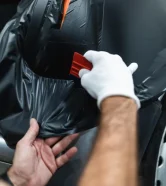
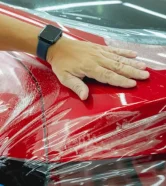
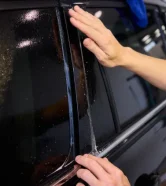
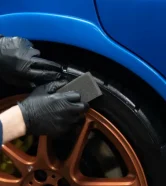
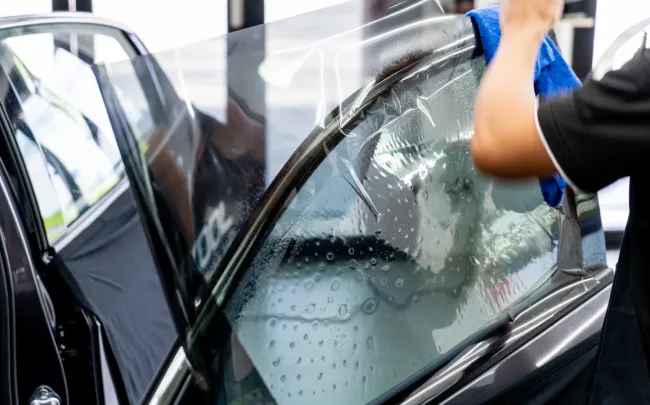
Our premium types of window tints are applied in a dust-free, indoor bay using computer-cut precision. This means no knives near your rubber seals and a bubble-free guarantee that actually lasts.
Final Thoughts
Choosing the right film comes down to your budget and how much you hate the heat. If you’re looking for a long-term investment that keeps your interior from cracking and your skin from burning, nano-ceramic is the clear winner.
FAQ
Nano-ceramic, hands down. It targets infrared heat (the stuff that actually burns) rather than just darkening the glass. You can have a relatively light ceramic tint that outperforms a dark dyed tint.
Only if you use metalized films. We skip those at Exclusive Car Care and stick to Carbon and Ceramic, so your phone, GPS, and Salik work perfectly.
Usually between 2 and 4 hours. We don’t rush it because the glass needs a deep clean first. If someone says they can do it in 20 minutes, run.
Wait 2 to 3 days. The film needs time to bond to the glass. Rolling the windows down too early is the quickest way to ruin a perfect job.