Ask a few installers about UV protection window tint, and most will quote the same figure: up to 99%. That number is real for certain films. It still leaves two questions open. How much of it applies to the film on your glass, and how much sun reaches you anyway? What follows covers what tint can do for skin, where it stops, and which figures to check before you rely on it.
Ultraviolet Radiation Does More Than Fade a Dashboard
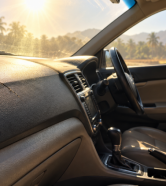
Ultraviolet radiation is invisible. You never feel it arriving, so comfort is a poor guide to how much of it you are getting. Long exposure is linked to damage to skin and eyes, and the same rays fade and crack upholstery and dashboards.
Drivers in Abu Dhabi spend long hours behind glass, so what that glass lets through is a fair thing to question. High-performance films are built in several layers, and some are rated to block up to 99% of UV rays along with a good share of infrared heat.
UV Protection Window Tint Versus Heat Rejection
Darkness, ultraviolet blocking, and heat blocking are three different measurements. A film can look nearly black and still let plenty of heat through, because a dark dye mostly cuts visible light.
Infrared is the part you feel burning on bare skin. Nano-ceramic film goes after it with tiny ceramic particles, which is why a lighter ceramic film can outperform a darker dyed one on heat. Dyed film sits at the other end, with the lowest heat rejection of the common options and a habit of fading under strong sun.
So a single headline number can describe UV, heat, or shade. Ask which one it is.
Three Ratings Worth Reading on a Spec Sheet
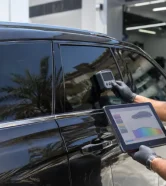
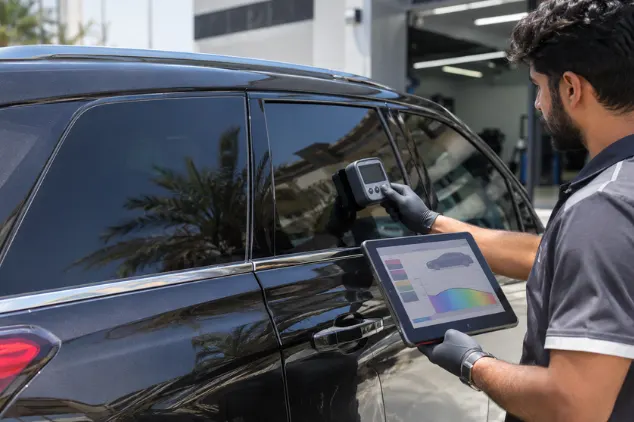
A data sheet usually lists three figures. UV rejection is the share of ultraviolet rays the film stops. Infrared rejection shows how much heat it holds back. Visible light transmission, or VLT, is the share of light that passes through, and it is the figure the law cares about.
For private vehicles in Abu Dhabi, the cited limit is 50% on side and rear windows, and the front windscreen generally stays untinted apart from a small visor strip. Rules get updated, so check the current wording before you pick a shade.
A film inside the legal darkness limit can still post a strong UV figure. Nano-ceramic is described as blocking almost all UV without needing to be pitch black, which is why choosing UV protection window tint by shade alone sends people in the wrong direction.
Where Tint Stops Helping
Film works only where it is applied. A lowered window gets no protection, and neither do you once you step out of the car. The front windscreen follows separate rules, so some exposure remains through it.
Film also ages. Cheap market tint can turn purple within a year of strong sun, and a film that has visibly changed color is worth showing to an installer. The same goes for a second-hand car that already has film fitted. Nobody may have kept a record of its rating, so asking an installer to identify it is a sensible first step before you assume it protects you.
Tint is not medical protection. It does not replace sunscreen, sleeves, or advice from a dermatologist, and anyone with a skin condition should ask a doctor how much in-car protection is enough.
Questions Worth Asking Before Installation
- Which UV rejection figure appears on the data sheet for this exact film?
- What will the finished VLT read on my side and rear glass?
- Does the film contain metal? Carbon and ceramic do not, which keeps phone signals, GPS, and Salik tags unaffected.
- Are the warranty terms in writing, and what do they cover?
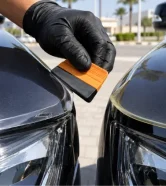
Fitting matters as much as the film. A careful job starts with a deep clean of the glass, then film cut by a computer plotter instead of on the car, applied in a dust-free indoor bay, and finished with a check for bubbles and edges. Afterward, wait two to three days before lowering windows or washing the car.
Final Thoughts
Tint can lower the UV that gets through side and rear glass, and the better films manage it without looking black. It cannot reach an open window, it does not replace sun habits, and the number that counts sits on the data sheet, not in the shade of the glass. For questions about your own skin, a dermatologist is the right person to ask.
Do you know the UV rejection rating of the film on your car right now? If not, ask whoever fitted it for the data sheet. Exclusive Car Care in Musaffah, Abu Dhabi, works with carbon and nano-ceramic films and is another place to ask.
FAQ
A good film does. Nano-ceramic is described as blocking up to 99% of UV rays, though that figure belongs to specific products. Darkness alone tells you nothing, so ask for the UV rejection rating printed on the film’s data sheet before you decide.
No. Tint only covers the glass it sits on, so a lowered window or a walk to the car gets nothing from it. Treat film as one layer of protection, not the whole plan. A dermatologist can tell you what your own skin needs.
Not automatically. Darkness, UV rejection, and heat rejection are rated separately, and a light ceramic film can beat a dark dyed one on heat. Compare each figure on the data sheet instead of judging by shade, and ask the installer to explain any number you do not recognize.
For private vehicles, the cited limit is 50% tint on side and rear windows, and the windscreen generally stays untinted apart from a small visor strip. Rules change, so confirm current limits with the traffic authority before you choose a shade or book any work.