Sun damaged car interior surfaces collected in the UAE do not arrive in one bad week. A dashboard looks fine in March and shows a hairline crack by the next summer, yet the plastic has been losing ground for years. Ultraviolet rays and infrared heat work as a pair, one breaking down the surface and the other cooking the cabin air. Here is how each does it, what early damage looks like, and what slows it down.
Two Forces Working on Your Cabin
Sunlight enters through glass as UV radiation and infrared energy. UV is the invisible part that fades color and weakens surface layers. Infrared is the heat you feel on your skin.
Glass lets that energy in but traps the warmth it creates, so a parked car climbs well past the outside temperature. A sun damaged dashboard is what a few hundred of those afternoons leave behind. Prolonged exposure matters more than any single hot day, because materials expand and settle with every heat cycle, and each cycle leaves a little less flexibility.
Steering wheels and seat belt buckles can get hot enough to burn skin. Children and pets should never be left in a parked car.
How Sun Damaged Car Interior Wear Builds Up Material by Material
Dashboard and plastics
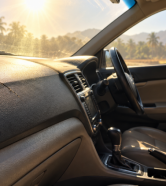
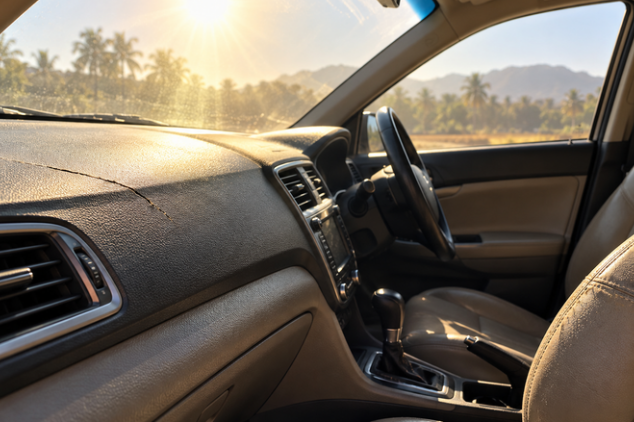
The dashboard faces the sky all day, so it takes the biggest dose. Vinyl and plastic lose the oils that keep them flexible, then go matte, then stiff. Dashboard cracks tend to start along seams, near vents and across the top, where the material is stretched tightest.
Leather
Leather dries out, and its dye fades, most visibly on seat shoulders and the tops of door cards. Faded leather feels rough where it once felt supple. Once the protective finish wears through, surface cracks follow.
Fabric and Trim
Seat fabric fades in patches, so the side facing the window ends up a different shade from the side facing the aisle. Rubber seals harden. Plastic trim can warp or turn chalky.
Early Signs Worth Catching
Run a hand across the dash. A sticky or chalky film, a dull patch, or a gritty texture means the surface is already breaking down. Compare the top of a seat with the area under a seat belt strap or floor mat, since color shifts show first at the edges.
Spotting sun damaged car interior wear at this stage matters, because fading and dryness can often be slowed while a split panel cannot be unsplit.
Slowing the Damage: Shade, Cleaning, and Window Film
Shade is the cheapest fix. Park under cover when you can, use a reflective windshield screen, and open the windows a touch where it is safe so hot air can escape. Wipe surfaces with a cleaner made for automotive interiors, because dust sits on the surface and wears it as it dries. UV protectant products exist, but results vary, and none replace shade.
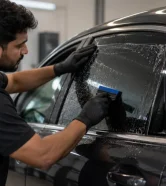
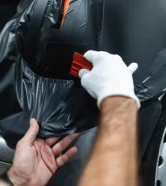
Window tinting is the other route. Multi-layer films are sold on their ability to block up to 99% of UV rays along with a share of infrared heat. Three types come up the most. Dyed film is the budget option and cuts glare. Carbon film holds its color and has no metal in it, so phone and GPS signals stay clear. Nano-ceramic film uses ceramic particles aimed at infrared heat, which is the part that bakes the cabin. Low-grade film can turn purple within a year of UAE sun, which undercuts the point of fitting it.
Film does not reverse existing damage, and results depend on the film and the fitting. The limit cited for private vehicles is 50% tint, but rules change, so confirm with the traffic authority before booking. After installation, wait two to three days before washing the car or rolling the windows down, so the film can dry fully.
Restoring a Sun Damaged Dashboard: What Is Realistic
Restoring sun damaged dashboard surfaces depends on how far the damage has gone. Fading and dryness can often be improved with gentle cleaning and a conditioner made for the material. Cracks, splits, and warped panels usually call for repair or replacement by a trained technician.
Skip harsh solvents. Do not glue, cut, or cover panels near airbags without checking the owner’s manual first, since a blocked deployment path is a safety risk. For anything beyond surface wear, a professional assessment is the safer route.
Final Thoughts
Heat and UV never take a day off in the UAE, but the damage they cause moves at a pace you can influence. Shade, regular cleaning, and a sensible film choice all slow it down. Anyone comparing film types can look at how Exclusive Car Care, a window tint and protection studio in Musaffah, Abu Dhabi, describes its dyed, carbon, and nano-ceramic options.
So when did you last run a hand across your dashboard and check what the surface actually feels like?
FAQ
Heat and UV pull the oils out of vinyl and plastic over time. The surface goes dry, stiff, and brittle, then splits where it is stretched tightest, often near vents or seams. It is usually years of daily exposure, not one hot week.
Light fading and dryness, sometimes. Cracks and splits are a different story, and most need a technician, especially near airbags. Gluing or covering those panels can interfere with how an airbag deploys, so check your owner’s manual or ask a professional first.
Film can cut a good share of UV and infrared heat entering the cabin, which slows fading and drying. Results depend on the film type and the fitting. It will not reverse damage that already exists, and it works best alongside shade.
For private vehicles, the limit cited is 50% tint. Rules can change, so confirm with the traffic authority before you book anything. Staying inside the limit helps you avoid fines and trouble at inspection.
Wait about two to three days before washing the car or rolling the windows down. The film needs that time to dry out completely, and moving it too early can disturb film that has not been set.