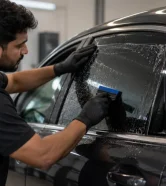
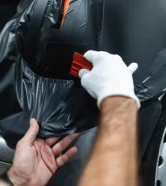
A tint job on one car usually takes about 2 to 4 hours, yet the film is not finished when the keys come back. Window tint curing time is the drying period that follows installation, and it explains the faint haze, the small water pockets, and the instruction to leave your windows alone. This guide shows what normal drying looks like, how it differs from a real installation fault, and what safe care looks like in the UAE heat.
How Does Window Tint Curing Time Work?
Installation is the short part of window tinting. The glass is scrubbed to remove every speck of dust, because film does not stick well to dirty glass. Each piece of film is cut on a computer plotter to match the window, so no blade touches the glass or the rubber seals. It then goes on in a clean indoor bay, and a final inspection checks for bubbles and uneven edges.
Then the film needs time to dry out completely. Some Abu Dhabi tint specialists advise waiting 2 to 3 days before rolling windows down or washing the car. Treat that as a benchmark, not a promise, since the exact schedule can vary with the film. Ask your installer for the timing that applies to yours and get it in writing.
When to Roll Down Windows After Tinting
Keep every window up for the first 2 to 3 days and skip the car wash. Moving the glass early puts friction on film that is still settling, which is the reason the rule exists.
Got a long drive or a car inspection coming up? Mention it when you book, since window tint curing time can affect your plans.
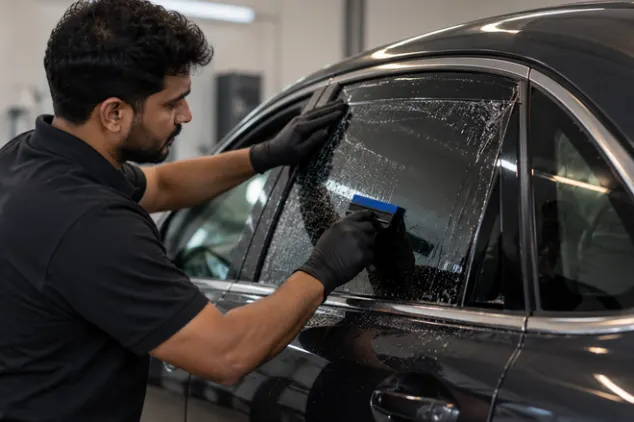
Bubbles in Window Tint After Installation: Drying or Defect?
Not every blemish means a poor job. Slight cloudiness and small water-like pockets can appear while the film is still drying. They tend to look soft and flat, and they shrink from one day to the next. Leave them alone and do not press them. Photograph them in daylight with the date, then check again once the drying window your installer gave you has passed.
A defect behaves differently. Specks or hair-like marks trapped under the film usually trace back to dust or dirt at the time of fitting, which is why clean glass and a dust-free bay matter. Bubbles that stay hard, raised, or growing after the drying period suggest adhesive trouble, and low-grade film is known to bubble when the glue fails in heat.
| What you see | Often part of drying | Worth a recheck |
|---|---|---|
| Cloudiness | Soft, even, easing over days | Patchy after the drying period |
| Small pockets | Watery, flat, shrinking | Hard, raised, or growing |
| Specks | Not expected | Dust or dirt shapes under the film |
| Edges | Sitting flat | Lifting or uneven |
Window Tint Aftercare and Cleaning Tinted Windows
Window tint aftercare in week one is mostly patience. Cleaning tinted windows comes after the waiting period, never during it. Read the care sheet from the filmmaker, because cleaning rules can differ between products, and ask your installer which products suit your film. A soft cloth is a sensible general starting point. Keep blades, scrapers, and rough pads away from the film, the same way installers keep knives off the glass.
Film Type, Signal, and the 50% Limit
Film type changes how a tint behaves, though every type still needs to dry. Dyed film gives privacy and glare reduction at the lower price end. Carbon film resists fading and has no metal in it, so phone signals and GPS should stay clear. Nano-ceramic film uses tiny ceramic particles to stop infrared heat, and multi-layered films are described as blocking up to 99% of UV rays. Non-metallic carbon and ceramic films are also described as compatible with Salik tags.
For private vehicles, the limit cited in the UAE is 50% tint. Rules can change, so confirm the current figure before choosing a shade.
Final Thoughts
Give the film its 2 to 3 days, keep the windows up and photograph anything odd. Soft haze and flat water pockets that shrink are usually part of drying, while dust specks, growing bubbles, and lifting edges call for a talk with the installer. This guide draws on window tint information from Exclusive Car Care in Abu Dhabi. Which of these signs do you see on your glass today, and how many days have passed since installation?
FAQ
One Abu Dhabi tint specialist says to wait 2 to 3 days before rolling the windows down or washing the car, since the film must dry out completely. Your film may differ, so ask your installer for the exact timing and keep it in writing.
Small watery pockets can show up while the film dries, and they usually flatten and shrink over several days. Hard, raised, or growing bubbles after that point toward an installation issue. Take dated photos and show your installer.
Carbon and nanoceramic films contain no metal, so phone signals, GPS, and Salik tags are not expected to suffer. Low-grade films may block GPS or radio, so check which film type went on your car.
For private vehicles the limit cited is 50% tint. Rules can change, so check the current UAE traffic regulations and confirm your film’s rating with the installer before you drive to an inspection.